Learning Objectives
- Explain the principles of Kolb's Experiential Learning Theory
- Relate Kolb's four learning stages to supervision in mediation
- Identify your learning style and reflect on its impact in mediation practice
- Apply ELT to supervision sessions to enhance mediator development
- Design supervision strategies that integrate experiential learning
Introduction to Kolb's Experiential Learning Theory
In mediation supervision, learning cannot rely solely on theory — it requires practice, reflection, and continuous adaptation.
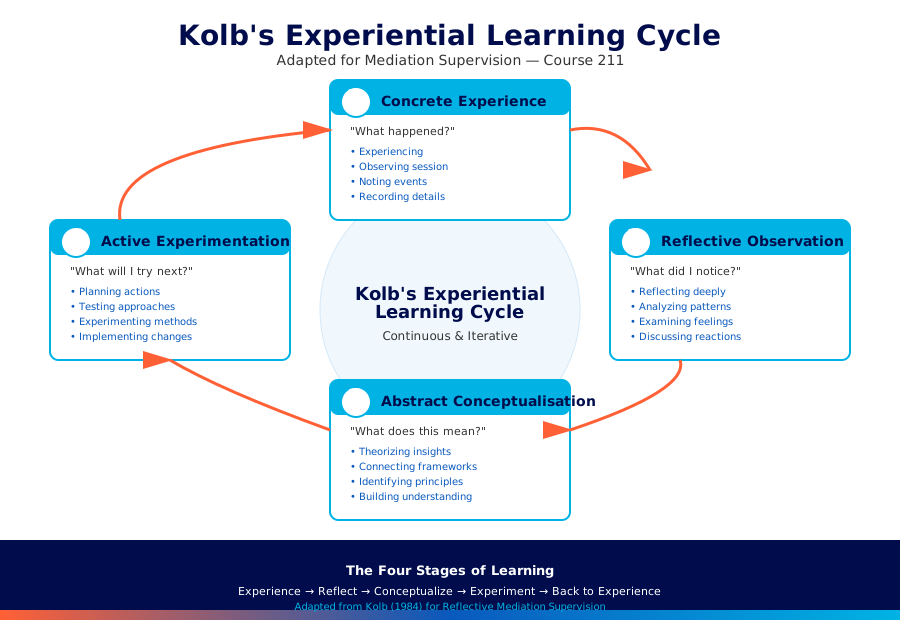
Kolb's Experiential Learning Theory (ELT) offers a structured cycle that transforms raw practice experiences into professional growth. Developed by David Kolb (1984), the model views learning as a cyclical process with four stages:
- Concrete Experience
- Reflective Observation
- Abstract Conceptualisation
- Active Experimentation
When supervisors guide mediators through all four stages, they help turn experience into insight, insight into theory, and theory back into practice.
Why Kolb's Model Matters in Mediation Supervision
Mediation is a practice-based, relational profession, where core skills — such as listening, reframing, neutrality, and managing emotions — are best developed through experience, reflection, and adaptation.
Kolb's Experiential Learning Cycle provides a roadmap for supervisors to help mediators turn lived practice into professional growth. As a supervisor, understanding this cycle is important because it mirrors how practitioners learn best in mediation training and professional practice: through experience, structured reflection, and supported application.
Concrete Experience
What happened? Supervisors invite mediators to describe an actual mediation moment, e.g., a client withdrawing emotionally, a power imbalance, or an intervention that didn't land. This is the lived experience—the raw material from which learning emerges.
Reflective Observation
What did I notice? The supervisor supports reflection on emotional responses, communication patterns, and client reactions. This is the pause to look back and consider what was observed, without yet jumping to judgment or analysis.
Abstract Conceptualisation
What does this mean? Supervisors link the reflection to theory (e.g., mediation ethics, FDR frameworks, conflict resolution principles). This stage draws out insights and principles from the reflection, connecting practice to broader understanding.
Active Experimentation
What will I try next time? The supervisee develops new strategies or techniques to test in future sessions, with supervisor support. This stage closes the loop and prepares for the next cycle of learning.
Five key components underpin effective experiential learning in mediation supervision:
1. Complexity and Uniqueness of Mediation
Why it matters: Every mediation involves unique parties, power dynamics, and cultural contexts. Reading or theory alone cannot prepare mediators for this variability.
Supervisor prompts:
- "What stood out about this case compared to others?"
- "Which dynamics surprised you?"
2. Integration of Skills and Ethics
Why it matters: Mediation is not just "what to do" but also "how to be." Ethics, neutrality, and boundaries are tested in practice.
Supervisor prompts:
- "Where did your values come into play?"
- "How did FDR regulations guide (or challenge) your decisions?"
3. Developing Reflective Practitioners
Why it matters: Effective mediators think critically about their interventions and seek to improve continuously.
Supervisor prompts:
- "What do you think this moment tells us about conflict behaviour?"
- "What principle or theory connects to this experience?"
4. Bridging Training and Real Practice
Why it matters: Classroom learning needs translation into live practice. Supervision bridges this gap through applied reflection.
Supervisor prompts:
- "What might you try differently next time?"
- "How can we test that approach safely in practice?"
5. Creating a Safe Environment for Learning
Why it matters: Mediators need psychological safety to share mistakes and uncertainties. This enables creativity and confidence in trying new approaches.
Supervisor prompts:
- "What did you learn from what didn't go as planned?"
- "What risks are worth taking for growth?"
The Supervisor's Practical Role
Supervisors can use Kolb's cycle as a roadmap for case review and practitioner development. Here are key practical strategies:
- Use Kolb's cycle as a roadmap for case review. Guide supervisees through each stage systematically, ensuring they don't get stuck in one phase.
- Ask lens-specific questions: "What happened? What did you notice? How does this link to theory? What will you try next?"
- Provide a balance of support and challenge to keep the supervisee moving through the cycle rather than getting stuck in self-criticism or over-analysis.
- Encourage mediators to journal using Kolb's cycle after difficult mediations, building reflective habit.
- Use role plays or micro-practice to test new strategies (Active Experimentation), creating safe space to try and refine new approaches.
By cycling through these stages repeatedly, supervisors help mediators develop the habit of learning from every experience—transforming challenges into growth opportunities.
When supervisors intentionally apply Kolb's Experiential Learning Model, mediators benefit significantly:
1. Promotes Self-Awareness
Mediators recognise emotions, biases, and assumptions that influence their practice. Through reflective observation, they develop understanding of their triggers, patterns, and impact on clients.
2. Encourages Critical Thinking
Reflection is grounded in theory and standards, not isolated emotion. Mediators move beyond "I felt bad about that" to "What principle applies here? What should I do next?"
3. Supports Skill Development
Mediators test new techniques in safe, guided ways. Rather than struggling alone or relying on ingrained patterns, they experiment with supervisor support and feedback.
4. Builds Resilience and Adaptability
Lessons are drawn from both success and challenge. Mediators learn that mistakes are data for improvement, not signs of failure, fostering growth mindset and professional resilience.
While watching the video and reflecting on the cycle, consider these prompts:
- Which stage of Kolb's cycle feels most natural to your learning style?
- Which stage challenges you the most, and how might that impact your supervision practice?
- How could you intentionally use this cycle to help practitioners deepen their skills in Family Dispute Resolution supervision?
- Can you recall a recent experience where you moved through all four stages, even informally? What did you take away?
You may wish to note your responses, as they will be useful for later activities and reflective journaling.