Module 4 Learning Outcomes
- Define debriefing and explain how it differs from supervision and management
- Identify the supportive, educational, and accountability functions of debriefing
- Apply structured models of debriefing (What? So What? Now What?, Gibbs' Cycle, Critical Incident)
- Facilitate basic debriefing conversations with colleagues in a safe and supportive way
- Recognise when debriefing should transition into supervision or referral for additional support
Welcome to Module 4
In the previous module, we explored the Reflective Balance Feedback Model and how to give balanced, reflective feedback in supervision. In this module, we shift focus to debriefing.
Debriefing is a structured, reflective process that can occur after mediation sessions, role plays, or significant professional events. It is not the same as supervision or performance management — instead, it functions more like professional first aid:
- Helping practitioners process experiences in real time
- Providing space for reflection and immediate learning
- Reducing the risk of unresolved stress, vicarious trauma, or burnout
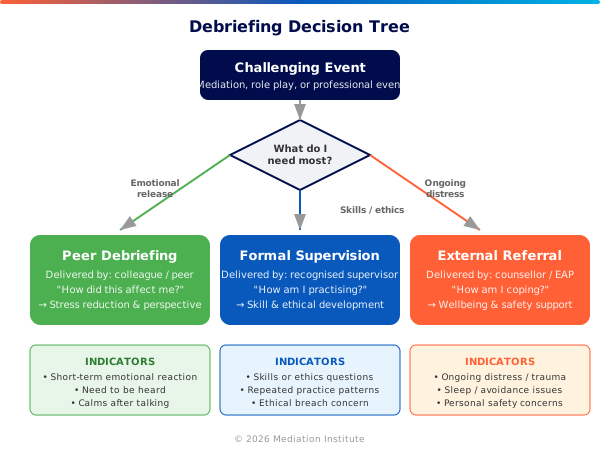
Debriefing skills are vital in FDR and mediation practice because practitioners frequently encounter emotionally charged, high-stakes situations. Without debriefing, unresolved stress can accumulate, affecting both wellbeing and practice quality. Unlike clinical supervision, debriefing can be provided by any trained peer or colleague — it is a skill that should be developed early and practised regularly.
Debriefing, Supervision & Management: Clarifying Boundaries
In mediation practice, it's easy to confuse debriefing, supervision, and management. Each plays a role in professional development and support, but they are not interchangeable.
| Aspect | Debriefing | Supervision | Management |
|---|---|---|---|
| Purpose | Emotional support and immediate reflection | Skill development, ethical accountability, professional guidance | Performance oversight, organisational compliance |
| Delivered by | Peer or colleague (trained in basic debriefing) | Recognised supervisor, senior mediator, or structured program | Manager, employer, team leader |
| Focus | "How did this event affect me, and what can I learn?" | "How am I practising, and how can I improve ethically and professionally?" | "How well am I meeting organisational goals, targets, and compliance?" |
| Timing | Short-term, often immediately after a mediation or event | Ongoing, scheduled sessions (monthly/quarterly) | Organisational cycle (annual reviews, team meetings) |
| Confidentiality | Confidential within peer agreement | Formalised, governed by professional standards | Limited, subject to employer/HR systems |
| Outcome | Stress reduction, perspective shift, early learning | Improved practice, ethical clarity, professional development | Compliance with organisational expectations |
Debriefing is supportive, short-term, and reflective. Supervision is developmental, structured, and accountability-focused.
Managers oversee performance and compliance but do not replace supervision or debriefing.
Blurring lines can risk confidentiality and trust. AMDRAS requires clear, structured professional development.
Think of a time when you discussed a challenging case with a colleague, a supervisor, and a manager. How did each conversation feel different? What did you gain from each one? Did you ever feel confused about the boundary between these roles?
Your Module Pathway
| Page | Topic | Focus |
|---|---|---|
| 1 | Module Overview & Boundaries | Orientation, learning outcomes, debriefing vs supervision vs management |
| 2 | Core Models & Decision Tree | Debriefing models, functions, skills, and escalation pathways |
| 3 | Practical Skills & Exercises | Reflective debrief, peer listening, stress mapping |
| 4 | Worksheets & Tools | Individual and group debriefing worksheets |
| 5 | Wrap-Up & Journal | Key takeaways, reflection, and journal entry |